986 区间列表的交集
一、题目
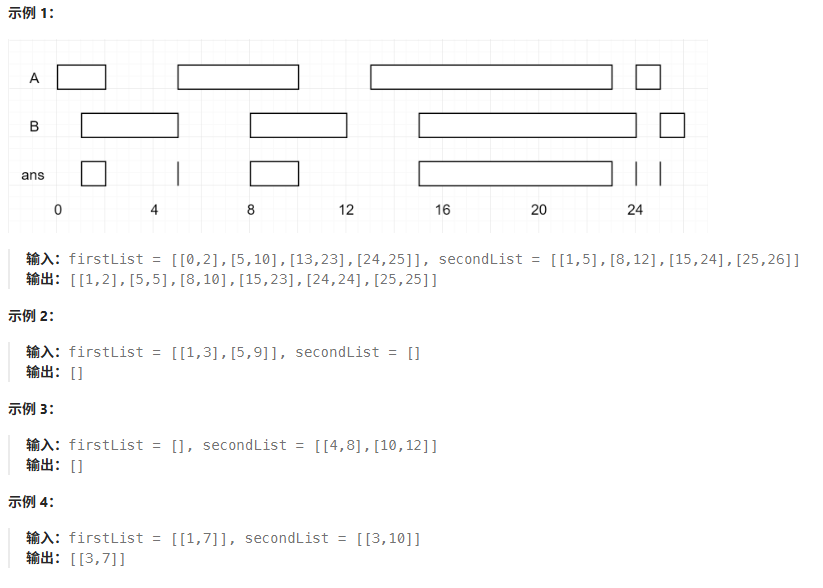
给定两个由一些 闭区间 组成的列表,firstList 和 secondList ,其中 firstList[i] = [starti, endi] 而 secondList[j] = [startj, endj] 。每个区间列表都是成对 不相交 的,并且 已经排序 。
返回这 两个区间列表的交集 。
形式上,闭区间 [a, b](其中 a <= b)表示实数 x 的集合,而 a <= x <= b 。
两个闭区间的 交集 是一组实数,要么为空集,要么为闭区间。例如,[1, 3] 和 [2, 4] 的交集为 [2, 3] 。
二、题解
思路:双指针法
我们可以使用两个指针 i 和 j,分别指向 firstList 和 secondList 中的当前遍历到的区间。
对于当前遍历到的两个区间 A = firstList[i] 和 B = secondList[j]:
- 判断是否有交集: 两个区间存在交集的条件是:两个区间起始端点的最大值,必须小于等于两个区间结束端点的最小值。 即:
start = Math.max(A[0], B[0])且end = Math.min(A[1], B[1])。 如果start <= end,那么[start, end]就是它们的一个交集区间。 - 移动指针: 找到交集(或者没有交集)之后,我们需要移动指针。谁的右端点更小,就移动谁的指针。 为什么?因为当前区间右端点较小的那个,不可能再与对方列表里的下一个区间产生交集了(因为它已经结束了,而对方列表的区间还在继续或者向后推移)。
- 如果
A[1] < B[1],说明firstList的当前区间结束得早,指针i++。 - 否则,说明
secondList的当前区间结束得早(或者同时结束),指针j++。
- 如果
import java.util.ArrayList;
import java.util.List;

class Solution {
    public int[][] intervalIntersection(int[][] firstList, int[][] secondList) {
        List<int[]> ans = new ArrayList<>();
        int i = 0, j = 0;

        // 当两个列表都还没有遍历完时,继续循环
        while (i < firstList.length && j < secondList.length) {
            // 获取当前遍历到的两个区间的起点和终点
            int a1 = firstList[i][0], a2 = firstList[i][1];
            int b1 = secondList[j][0], b2 = secondList[j][1];

            // 计算可能交集的起点和终点
            int start = Math.max(a1, b1);
            int end = Math.min(a2, b2);

            // 如果 start <= end,说明有真实的交集
            if (start <= end) {
                ans.add(new int[]{start, end});
            }

            // 谁的右端点小,谁的指针向前移动一步
            if (a2 < b2) {
                i++;
            } else {
                j++;
            }
        }

        // 将 List 转换为二维数组返回
        return ans.toArray(new int[ans.size()][]);
    }
}时间复杂度:
空间复杂度:
评论